

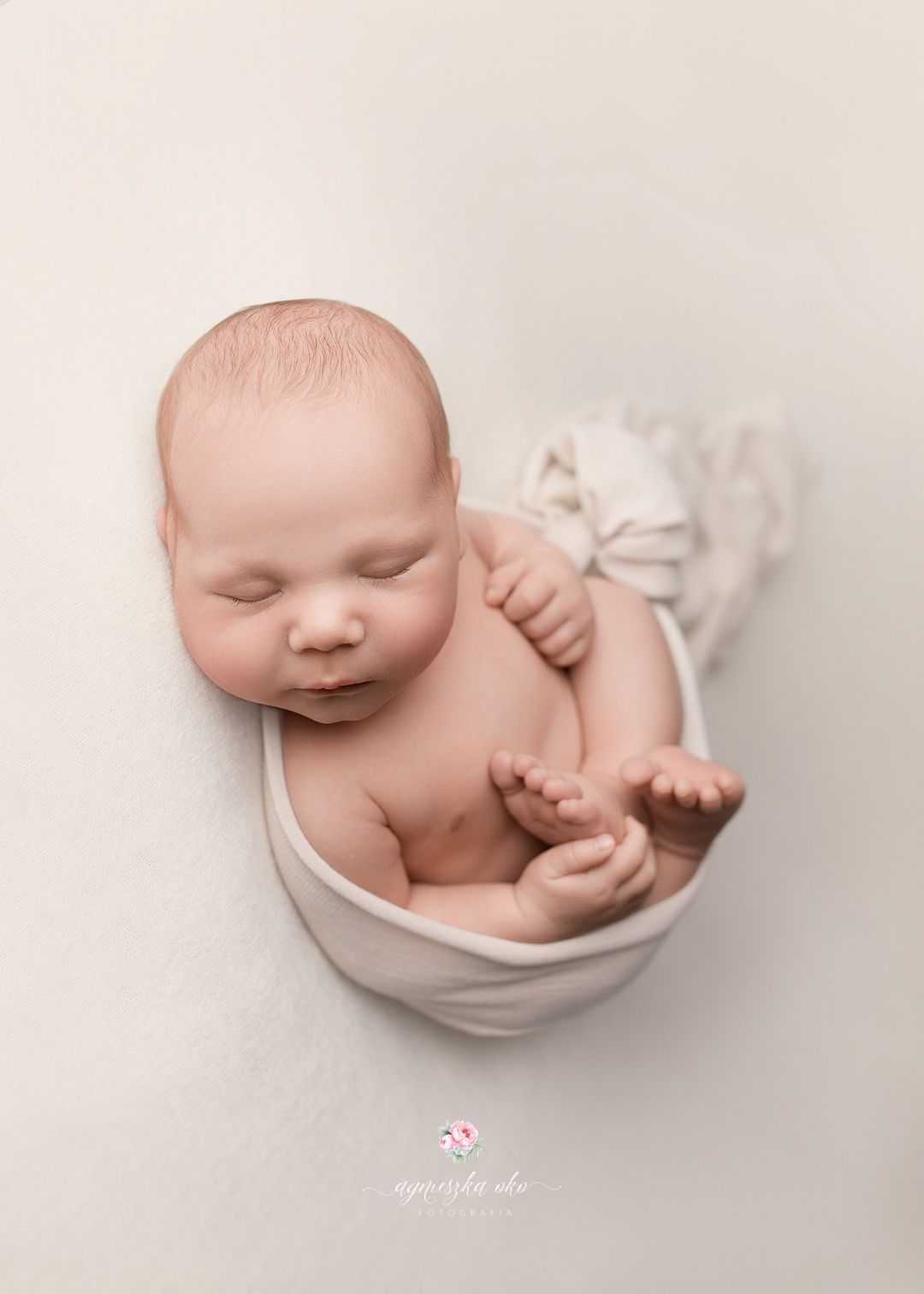
Some of the most useful backdrops in a newborn photography studio are also the simplest.
Cream, beige, taupe and other muted tones provide a versatile foundation for different outfits, wraps and styling details. The same backdrop can look soft and minimal in one session, then warmer and more textured in another.
But choosing a neutral backdrop isn't just about choosing beige. Undertone, fabric texture and the colours you pair with it all influence the final image.
Why Backdrop Colour Matters in Newborn Photography
A backdrop helps establish the overall colour palette of a newborn setup. It influences which wraps, outfits and accessories work together and how the final composition feels.
Colour can also affect how newborn skin appears in photographs.
Strongly coloured fabrics may reflect light onto the baby, creating colour casts that can be more noticeable on skin. Neutral fabrics can help reduce some of these distractions, although lighting, white balance and editing remain important.
This is one reason many photographers keep a selection of neutral backdrops in their studio: they offer a flexible starting point for a wide range of styling choices.
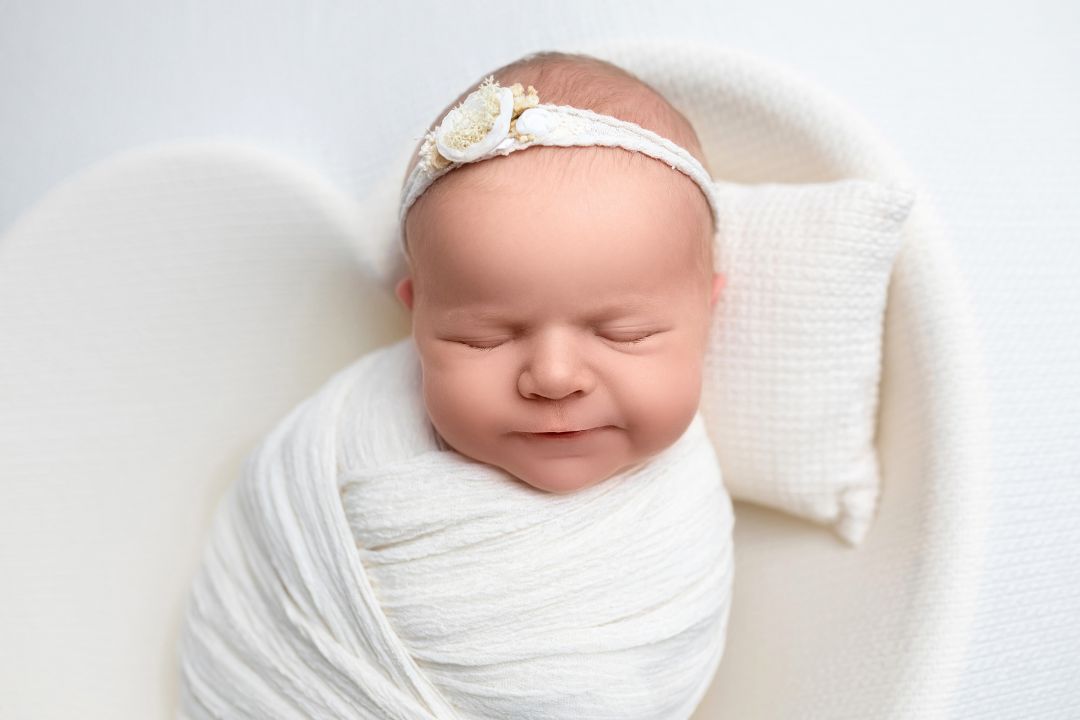
Image by Olga Tsybenko (olga_milkystudio) with our Laura backdrop in use (colour light beige)
Not All Neutral Backdrops Look the Same
Two beige backdrops can create very different results.
A warm beige may have golden or peach undertones, while a cooler taupe can appear more muted or grey. Even subtle differences can influence how the backdrop coordinates with outfits and wraps.
Texture matters just as much.
A smooth jersey backdrop creates a clean, understated surface. A delicate knit adds softness and subtle detail, while a more visible texture becomes part of the composition.
If you're deciding between fabric types, read our guide to choosing newborn photography backdrop fabrics.
Neutral Backdrop Colours to Consider
Cream & Off White — Light and Airy
Cream and off-white backdrops are popular for bright, minimal newborn portraits.
They pair naturally with white, ivory and light beige outfits, but can also provide a soft contrast to warmer knitted pieces.
Keep an eye on undertones: a warm cream and a cooler white may look quite different when placed together.
→ Explore Off White Newborn Backdrops
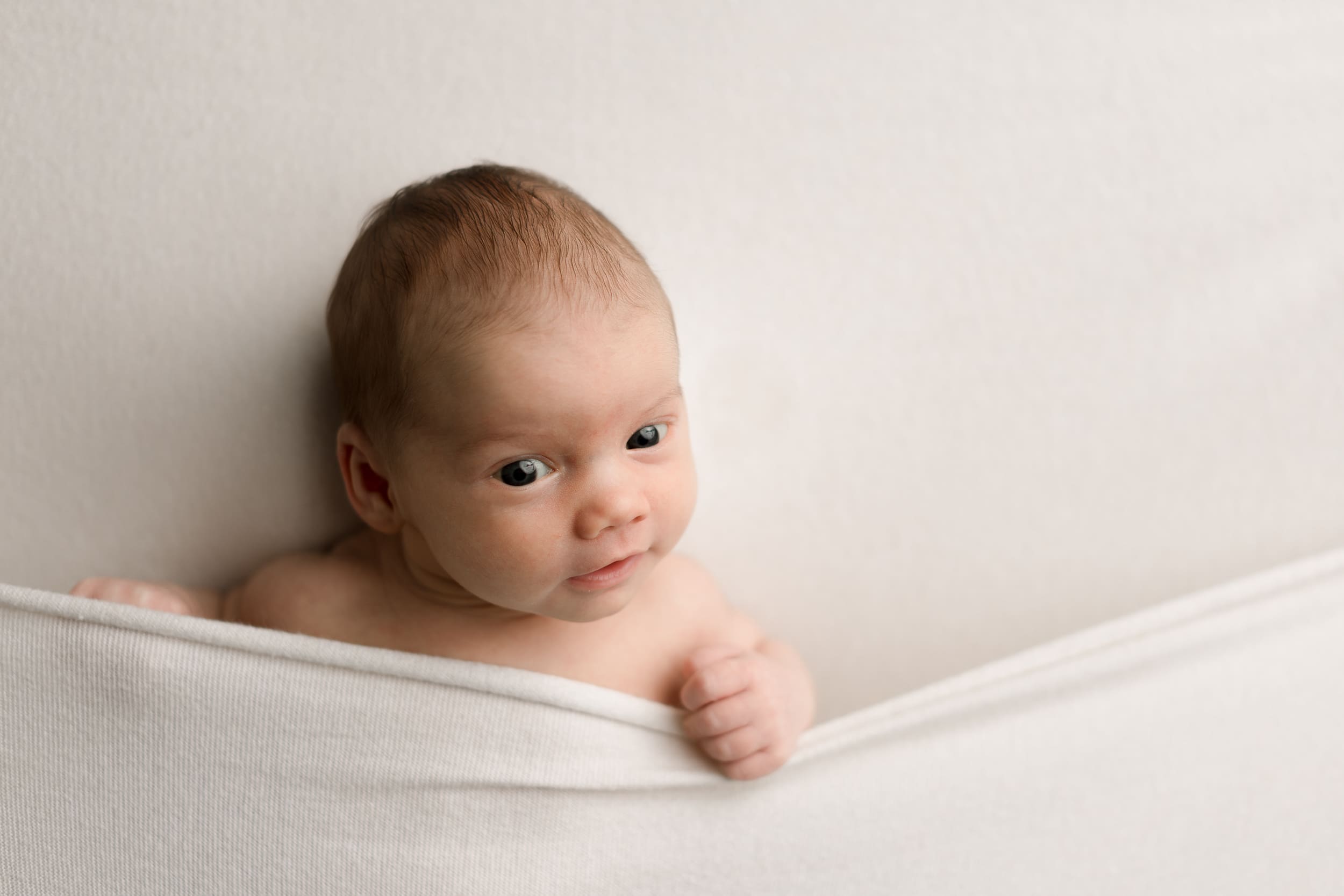
Image Photo by Sandy Maiwald with our backdrop Sonia - light beige in use
Beige, Taupe & Oatmeal — Warm and Versatile
Beige, taupe and oatmeal shades are useful foundations for photographers who prefer natural, understated styling.
They work particularly well with knitted outfits, textured wraps and other neutral accessories.
These colours can also create subtle tonal combinations: a lighter wrap against a deeper beige backdrop, for example, adds separation without introducing a strong new colour.
→ Explore Beige Backdrops & Matching Pieces
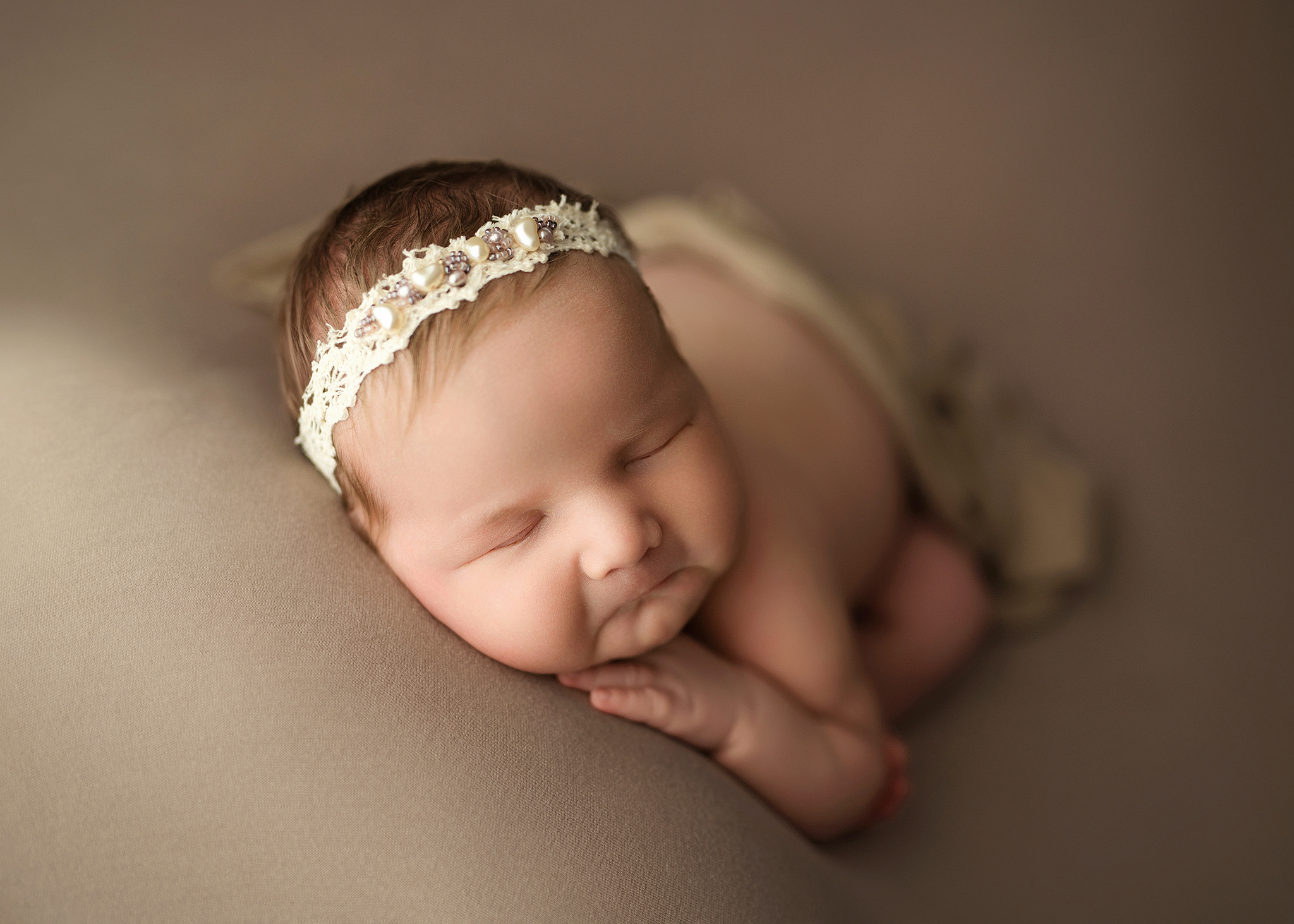
Image by Daniela Ursache with backdrop and wrap Mila (cappuccino)
Sage — A Soft Alternative to Traditional Neutrals
Sage offers a little more colour while retaining a muted, understated appearance.
It can work beautifully with cream, oatmeal and other soft natural tones, making it a useful choice when you want variation without a highly saturated backdrop.
The exact effect depends on the shade: some sage tones appear warmer and earthier, while others lean towards grey or blue.
→ Explore Blue & Green Backdrops

Image Photo by Sandy Maiwald with our backdrop Pola → - sage in use
One Neutral Backdrop, Different Styling Options
A neutral backdrop doesn't have to create the same look every time.
Start with a beige backdrop, then change just one or two elements:
-
For a minimal look: add a smooth wrap in a similar shade.
-
For more texture: introduce a knitted outfit or a soft cheesecloth layer.
-
For gentle contrast: choose an accessory in a slightly lighter or deeper tone.
You can also combine pieces in the same colour family but with different textures. This adds depth while keeping the overall palette cohesive.
For more practical combinations, see our guide to matching newborn photography props.
How to Choose a Neutral Backdrop for Your Studio
Before adding another neutral backdrop to your collection, consider three things.
1. Your editing style. Do you usually create bright, airy images or warmer, moodier portraits? Choose tones that complement the look you consistently produce.
2. Your existing props. Look at the wraps, outfits and accessories you already use. A backdrop that coordinates with several favourites may be more useful than a completely new shade.
3. The texture you need. If you already own several smooth backdrops, a knitted or textured neutral may offer more variety than another similar jersey fabric.
The goal isn't to own every shade of beige. It's to build a collection of backdrops that work well with the pieces you reach for most often.
Explore Neutral Newborn Photography Backdrops
Neutral backdrops provide a flexible foundation, but the right choice still depends on your preferred colours, textures and styling approach.
Explore our Newborn Photography Backdrops to compare different fabrics and shades, or browse Backdrops & Matching Pieces to find coordinating options for your next setup.