

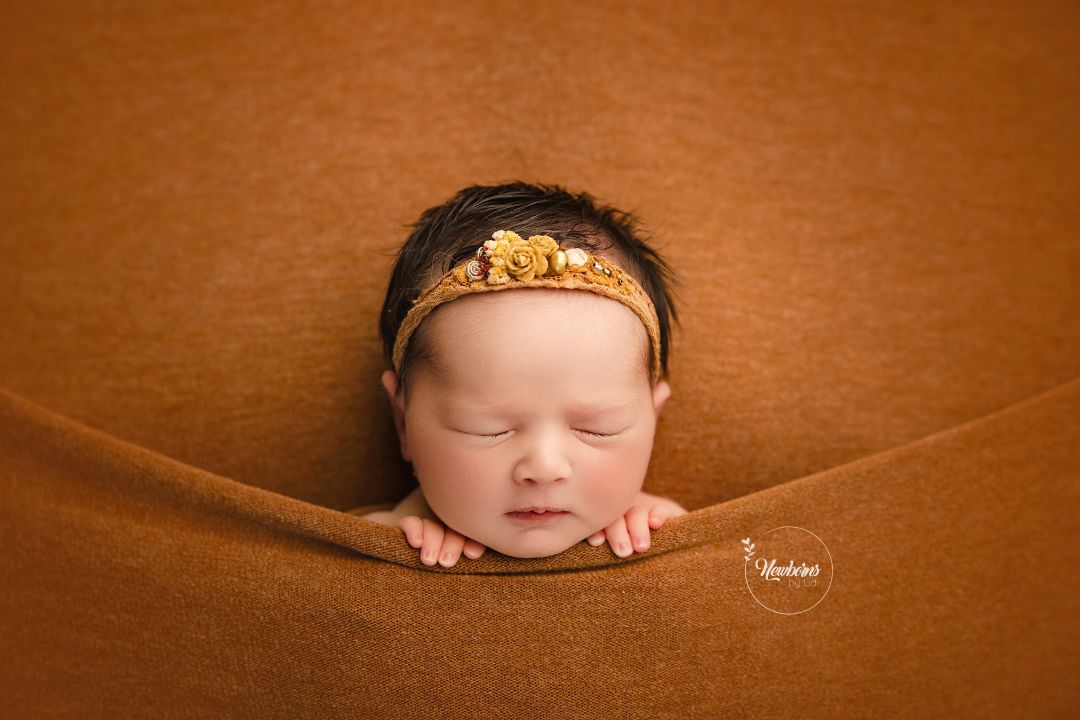
Creating a cohesive newborn photography setup doesn't mean every piece has to be identical. It's about choosing backdrops, wraps, outfits and accessories that work well together in colour and texture.
A beige backdrop and a beige wrap, for example, may look quite different when placed side by side. Undertones, fabric textures and lighting all affect the final result.
Here is a simple way to match newborn photography props, with practical combinations you can adapt to your own style.
Start With Your Backdrop and Colour Palette
The backdrop is a useful starting point because it covers a large part of the setup and helps establish the overall colour palette.
Begin by choosing the look you want to create:
-
Light and minimal: off-white, cream or soft beige
-
Warm and natural: beige, taupe or muted brown
-
Soft colour: dusty pink, sage green or muted blue
Once you've chosen your backdrop, look for wraps and outfits in the same colour family or in a complementary shade.
Pay attention to undertones. Two fabrics described as beige may not match exactly — one might lean towards yellow, while another has a cooler or pinker undertone.
If you're buying pieces separately, compare photographs taken in similar lighting whenever possible.
Choose a Matching Wrap or Outfit
Once your backdrop is selected, decide which piece will sit closest to it in the photograph.
For a simple, coordinated look, you can choose a wrap in a matching shade. This creates a soft transition between the baby and the surrounding fabric.
If you prefer a little contrast, try an outfit with a different texture but a similar colour.
For example:
Smooth backdrop + matching wrap
A clean, understated combination that works well for minimal newborn portraits.
For example:
Smooth backdrop + matching wrap
A clean, understated combination that works well for minimal newborn portraits.
Smooth backdrop + knitted outfit
The smooth background allows the knitted stitches to become a more visible part of the styling.
Knitted backdrop + simple wrap
The backdrop adds texture while the wrap keeps the overall composition balanced.
At Amaia, selected backdrop collections offer coordinating wraps, outfits or accessories. You can explore these combinations in our Backdrops & Matching Pieces collection.
Mix Textures Without Overcomplicating the Setup
Matching colours doesn't mean every fabric needs the same texture.
Combining different surfaces can make a tonal setup more interesting without introducing additional colours.
A smooth backdrop with a textured romper creates a different effect from a knitted backdrop with a simple wrap, even when both combinations use similar shades.
One useful approach is to choose which element should provide the most visible texture.
If your backdrop has a pronounced knit or pattern, you might prefer a simpler wrap. If your backdrop is smooth, a knitted outfit or decorative accessory can add detail.
There is no need to follow a strict rule. Look at the complete composition and consider how the textures appear together.
For a closer comparison of smooth jersey, sweater knits and textured fabrics, see our Guide to Newborn Photography Backdrop Fabrics.
1. Minimal Off-White — Pola Backdrop + Knitted Outfit
Start with a smooth Mila backdrop in off-white and pair it with a knitted outfit.
The smooth background keeps the setup clean and understated, while the knit adds texture without introducing another colour.
This is a simple way to create visual interest in a monochromatic setup.
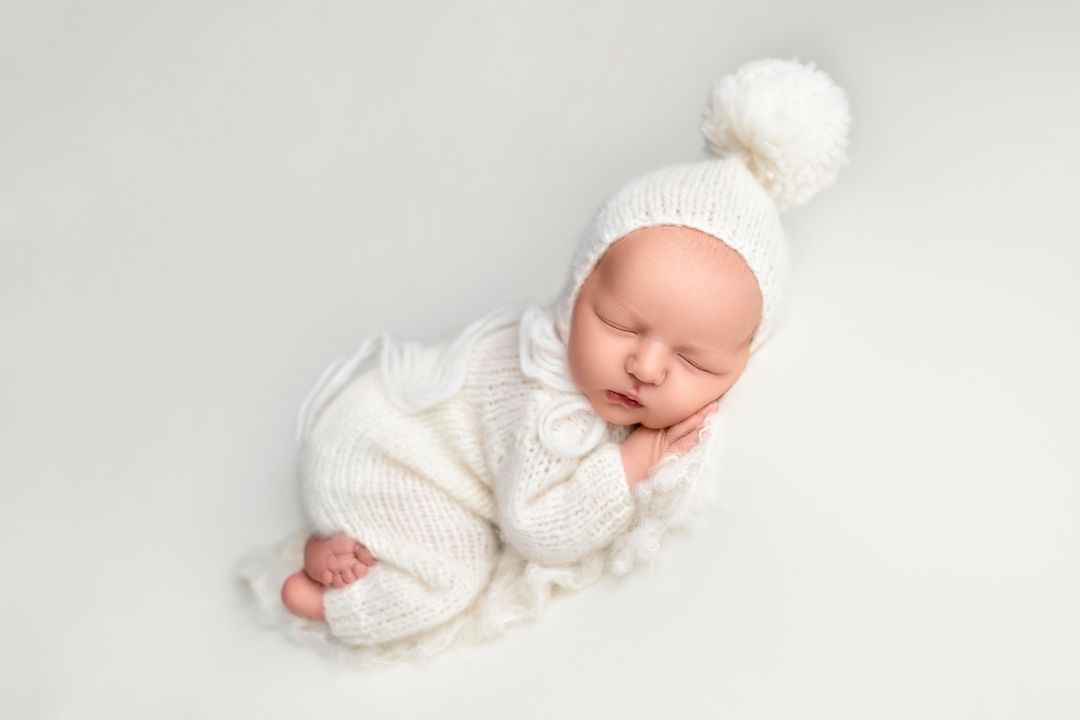
Image by Olga Tsybenko (olga_milkystudio) with our Mila off white backdrop + Leo Outfit
2. Matching Knits — Stella Backdrop + Wrap
Pair a Stella sweater-knit backdrop with a wrap in the same knit and colour.
Using matching fabrics creates a continuous, soft-looking background, with the knitted texture running through the entire setup.
It's a lovely option for photographers who prefer a cozy, monochromatic look.
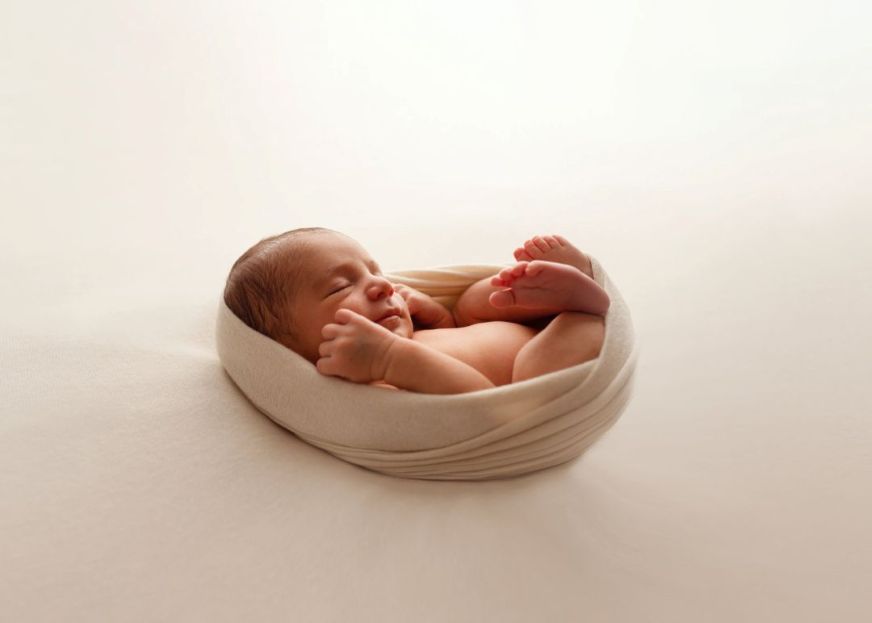
Image by Emilie Zangarelli with our Stella Light beige backdrop and wrap
3. Matching Textures — Laura Backdrop + Wrap + Outfit
Combine a textured Laura backdrop with a coordinating wrap and outfit in light beige.
The matching colour and texture create a cohesive look, with subtle fabric detail throughout the setup.
This combination is ideal for photographers who love textured, monochromatic newborn portraits.
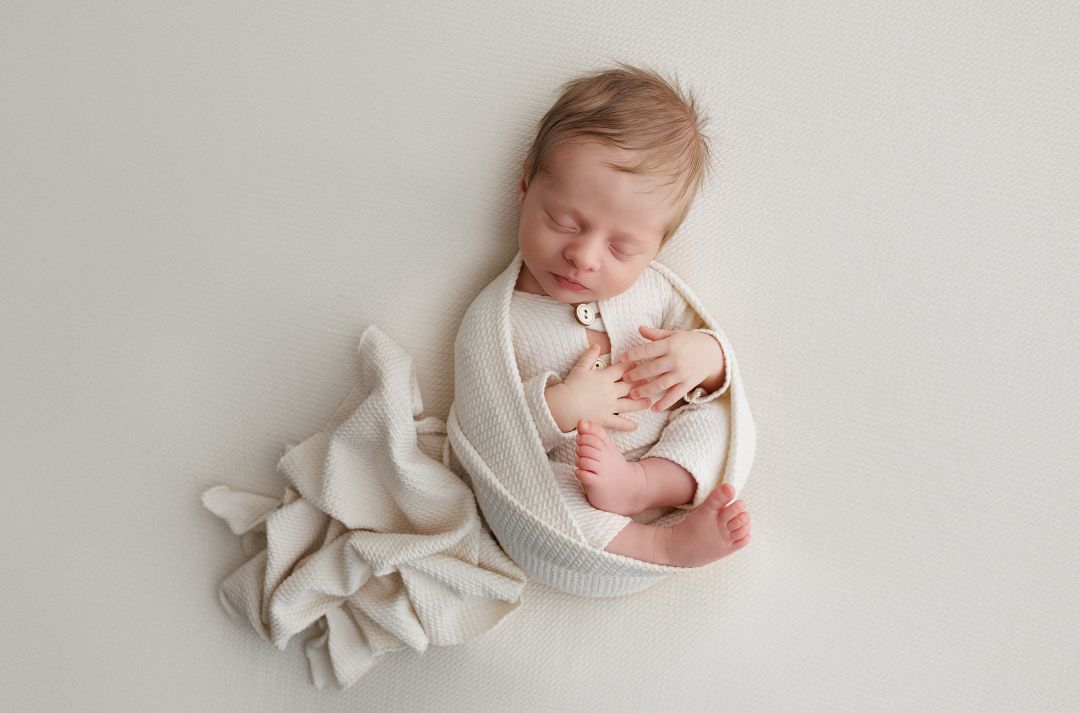
Image by Olga Tsybenko (olga_milkystudio) with our Laura backdrop, wrap and outfit - light beige
Common Mistakes When Matching Newborn Photography Props
Choosing pieces by colour name alone. Colours such as beige, cream and taupe can vary significantly between fabrics. Compare undertones and product photographs rather than relying only on the name.
Using too many competing textures. Several pronounced patterns can make a small composition feel busy. Try balancing a more detailed fabric with a simpler piece.
Ignoring how lighting affects colour. Warm and cool lighting can change how fabrics appear together. Check your chosen combination under the lighting you plan to use.
Adding accessories without considering the whole setup. A bonnet, headband or decorative detail should complement the backdrop and outfit rather than compete for attention.
A cohesive setup doesn't have to use a single colour or identical materials. What matters is how the pieces look together in the finished photograph.
Frequently Asked Questions
Do newborn photography props need to match exactly?
No. Matching shades can create a soft, monochromatic look, but complementary colours and contrasting textures can work equally well. Choose combinations that suit your photography style.
How do I match a newborn wrap to a backdrop?
Start with the backdrop colour and check its undertone. Choose a wrap in a similar shade for a tonal look, or use a complementary colour for gentle contrast. Consider the texture of both fabrics as well.
Can I combine smooth and knitted newborn photography props?
Yes. A smooth backdrop with a knitted outfit, or a textured backdrop with a simple wrap, can create visual contrast without making the setup feel too busy.
How many different backdrops do I need for a newborn session?
There is no fixed number. One backdrop can be used for different compositions, while additional backdrops offer more colour and texture options. Choose according to your session plan and available time.
Explore Backdrops & Matching Pieces
If you prefer choosing pieces that are designed to coordinate, explore Amaia's Backdrops & Matching Pieces.
Selected collections allow you to combine a backdrop with coordinating wraps, outfits and accessories, helping you build a setup around the colours and textures you love.